
Why oral assessment was the talk of D2L Fusion and InstructureCon 2026.

This July took us to two of the biggest gatherings in the learning world, D2L Fusion in Phoenix and InstructureCon in Louisville. Across both, one question kept coming up. As AI becomes part of everyday student work, how do you really know what a student understands? That is the conversation we came home thinking about, and why oral assessment kept coming up as the answer.
What we brought home from D2L Fusion and InstructureCon 2026
This July we spent time with two of the biggest communities in the learning world, and both left us with a lot to think about. First we joined D2L Fusion 2026 in Phoenix, and soon after we were in Louisville for InstructureCon 2026. Different cities and different communities, yet many of the same conversations, which is exactly why we wanted to write about them together.
The conversation everyone kept coming back to
One theme followed us from Phoenix to Louisville. As AI becomes part of everyday student work, educators want a clearer way to understand what students genuinely know and can do. It came up in hallway chats, in sessions, and in the questions people brought to us, and it was clear that this is on almost everyone's mind right now.
This is exactly why oral assessment is getting so much attention. When answers are easy to generate, a real conversation is still the most trusted way to see how a student thinks, reasons, and explains their understanding. Orals have always done this well, and what has changed is that they can now happen at scale, across large cohorts, without adding hours to an instructor's week.
Why oral assessment kept people talking
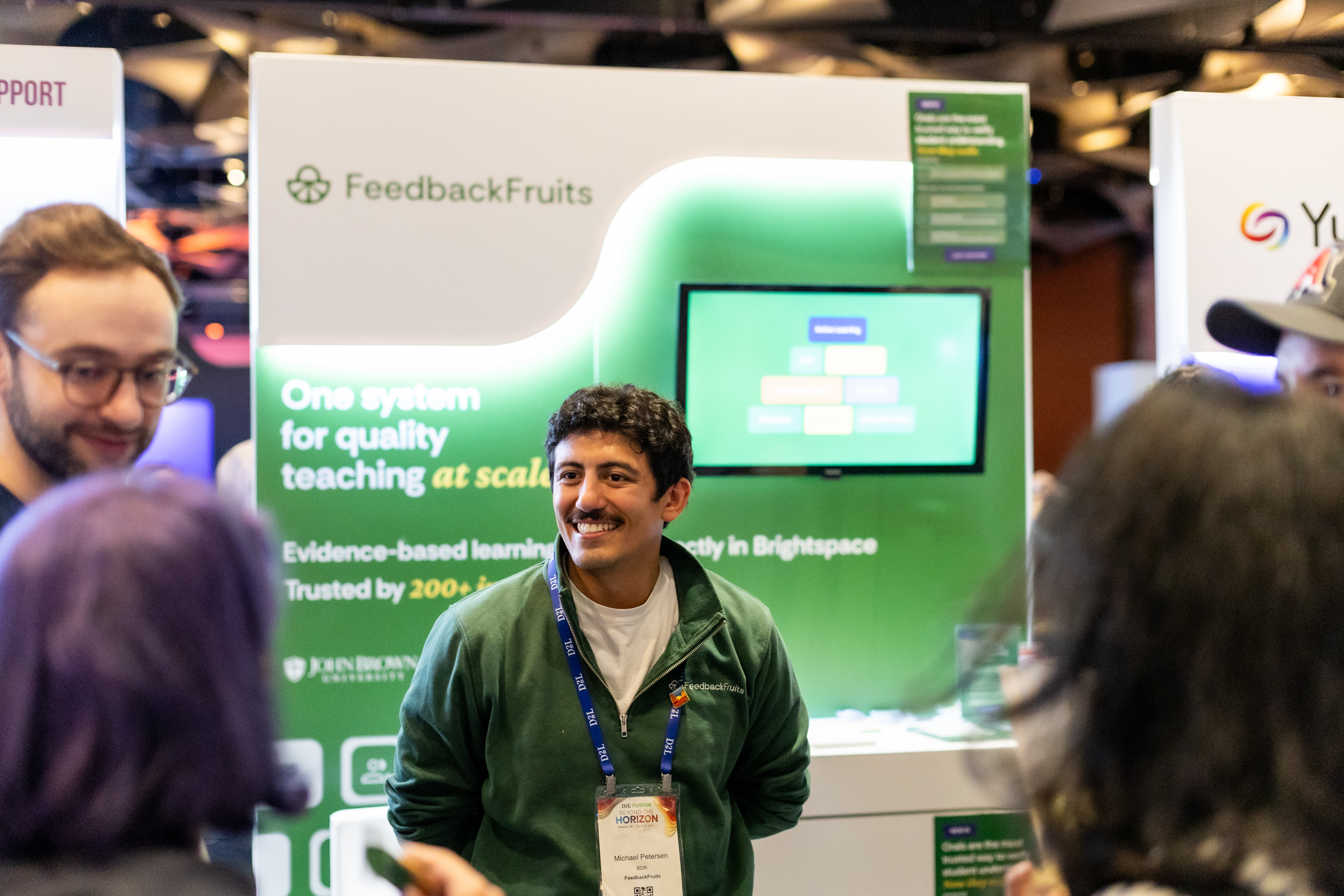
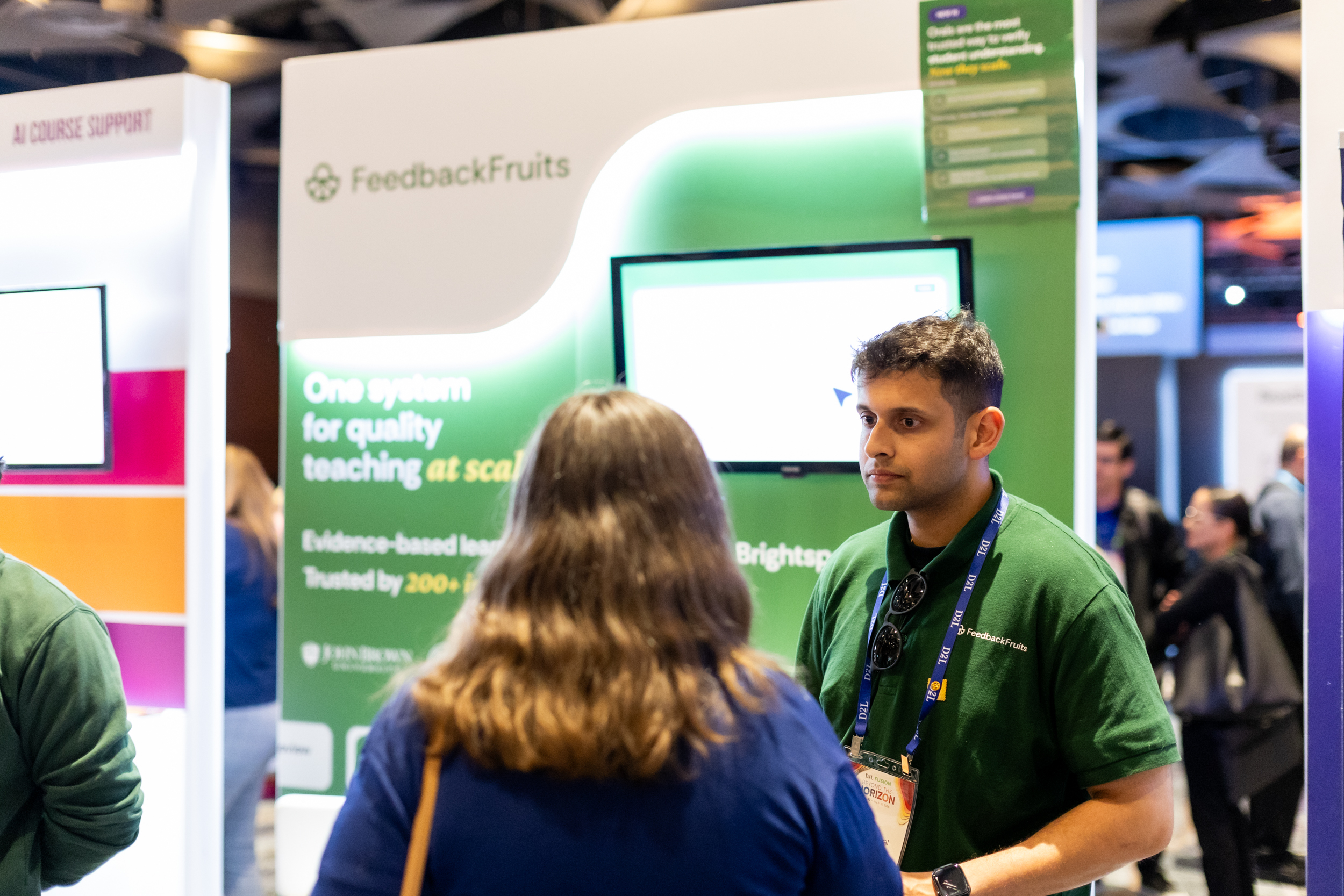
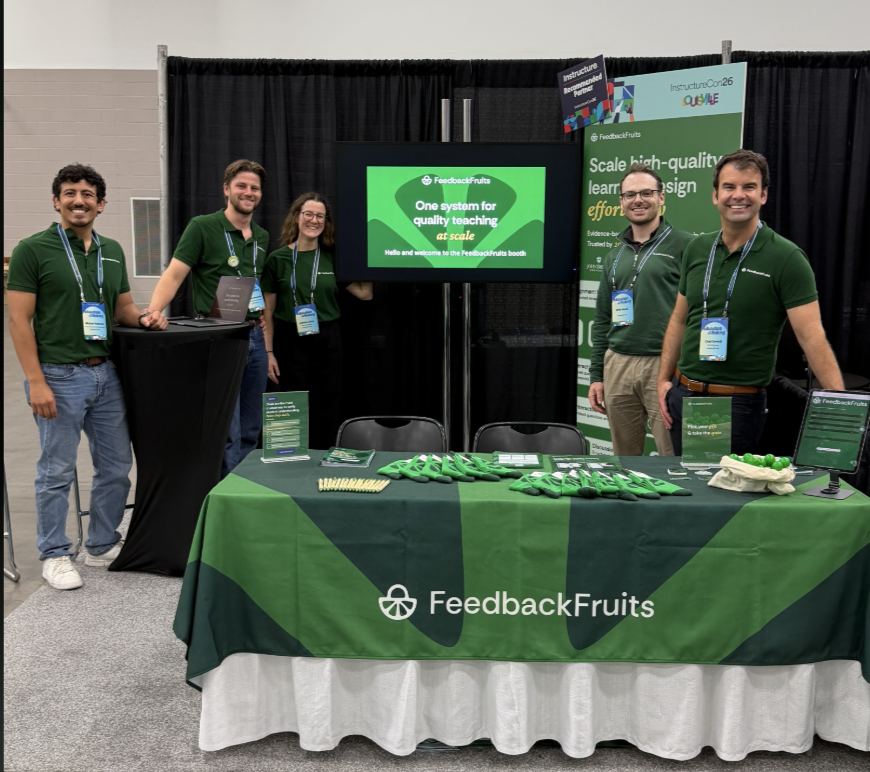
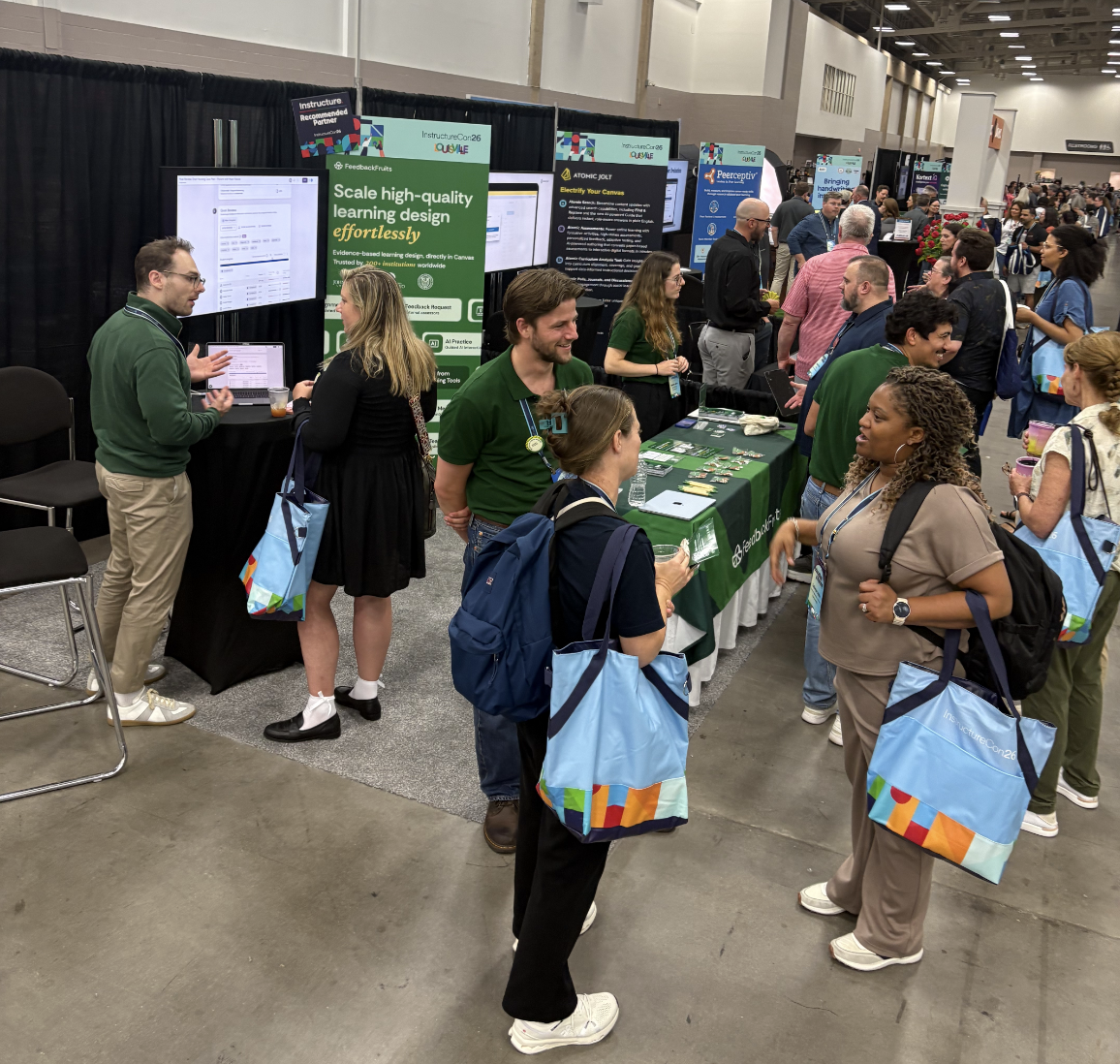
At D2L Fusion, we felt this interest firsthand, as Brett, Andy, and Michael met a steady stream of visitors throughout the week and shared our Brightspace use case booklet. There were plenty of good conversations, a few waffles, and some socks that found happy new owners. At InstructureCon, we found ourselves in many of the same conversations, with educators from the Canvas community raising the very same question, which is how to keep assessment authentic and human while still making it manageable for busy teaching teams. We also shared our Canvas use case booklet, created for institutions using FeedbackFruits in Canvas, so educators could picture exactly how oral assessment would work in their own courses.
Our Oral Assessment and Practice solution turned out to be a natural answer at both events, and it was a pleasure to walk people through real examples and hear how it connected to the work they care about.
The three new learning tools we were excited to share
Our new solution brings together three learning tools that support students from early practice all the way through to reflection, with pedagogical AI helping instructors along the way.
Oral Practice gives every student a calm space to rehearse explaining their thinking before an assessment. Through dynamic dialogue supported by AI, students build confidence and critical thinking, while instructors gain early insight into how each student is progressing.
Oral Assessment makes it possible to run consistent oral assessments at scale through structured live conversations. Students demonstrate genuine understanding, and AI supports instructors in the moment by strengthening questioning, surfacing key insights, and generating session summaries.
Oral Reflection helps students articulate their reasoning and build a habit of reflection, so their learning becomes visible. AI highlights the key moments, which means instructors gain meaningful insight without having to review every recording.
Thank you, Phoenix and Louisville
Both events reminded us that the future of assessment will be shaped by many thoughtful people working together, and it was a privilege to be part of that conversation in two wonderful cities. If you visited us at either event, thank you for stopping by and for sharing what you are working on. And if we did not get the chance to meet, we would still love to show you around.
You can explore the full Oral Assessment and Practice solution to see how the three tools work together, and for more on designing assessment that holds up in an age of AI, our ebook on Oral Assessment at Scale is a good place to start.
And if you would like to explore what oral assessment could look like at your institution, you can book a meeting with our team whenever it suits you. We would be glad to walk you through it and answer any questions you have.


![[New] Competency-Based Assessment](https://no-cache.hubspot.com/cta/default/3782716/interactive-146849337207.png)


.png)

.avif)


